The best time to book a Great Barrier Reef snorkel tour
From Cairns and Port Douglas down to Airlie Beach, snorkel boats leave on most days of the year, so there is no closed season. What changes through the year is the wind and the rain, plus the jellyfish in the warmer months. Below is how each part of the year tends to feel on the water, and the days we would not go at all.
Reef trips run all year
Tropical Queensland has no winter in the northern sense, and the reef boats keep sailing through every month. You can snorkel the Great Barrier Reef at Christmas or in July, and both can turn out well.
What the calendar changes is the trade-off. One part of the year brings clear skies with stronger wind, another lighter wind with heat and rain. The patterns below are general, and any single day can break them.
| Part of the year | Weather | Sea | Stingers |
|---|---|---|---|
| May to August | Dry, cooler air | Trade winds can make it choppy | Lower risk |
| September to November | Dry, warming up | Often lighter winds | Risk rising from November |
| December to March | Hot, humid, rainy | Calm days mixed with storms | Highest risk |
| April | Rain easing | Variable | Still in season |
The dry season, roughly May to October
These are the months most visitors pick, and for good reason. The air is cooler and rain is rare. Skies are usually clear, which helps light reach the coral.
The downside is the south-east trade winds, which tend to blow through much of this period. On a windy day the open water to the outer reef can turn choppy, and that is when reviewers on the bigger trips mention seasickness.
If you know you get queasy, read our seasickness guide before you book a dry-season trip. A closer reef, such as Green Island, is a gentler choice on a breezy day.
Late in the year, often the calmer stretch
From roughly September to December the trade winds often ease. Lighter wind usually means a smoother crossing and calmer water at the snorkel sites. Beginners and anyone prone to seasickness gain the most.
The weather is warming but the heavy rains have usually not started. It is not a promise of flat seas, only a pattern that holds more often than not. Stinger season starts to overlap toward the end of it.
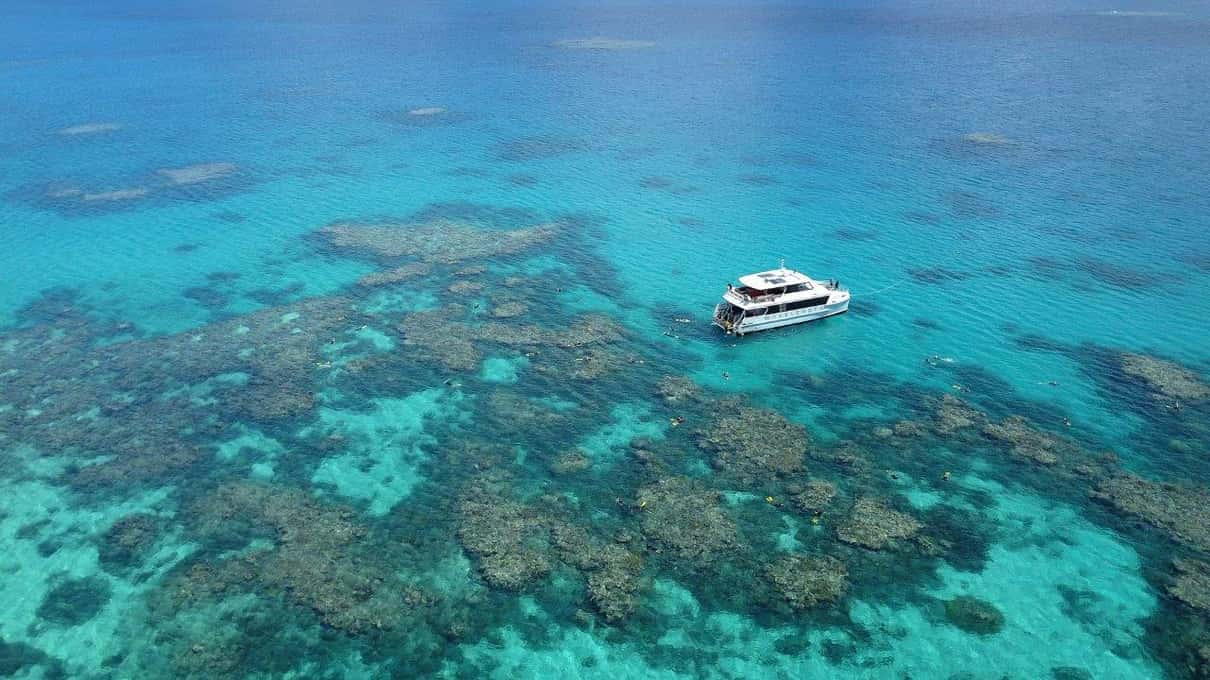
The wet season, roughly December to March
This is the hot, humid part of the year. Heavy showers and storms often build in the afternoon. Morning departures, which are standard on reef trips, often miss the worst of it.
Cyclones are the real risk. A cyclone or a strong wind warning can cancel trips for a day or longer, so leave a spare day in your plans. If the operator cancels for weather, you are usually offered a refund or a new date; check the listing's policy.
On the plus side, boats can be less crowded outside the holiday weeks. Water clarity varies more after heavy rain, especially at sites close to the coast and rivers.
A reef day that fits any month
Passions of Paradise sails from the Reef Fleet Terminal at 8:00 am to two outer reef sites. Lunch is served on board, and stinger suits come out in the warmer months. Compare the dates on both listings.
Stinger season and water temperature
Box jellyfish and Irukandji drift through tropical Queensland waters, and the risk is highest from roughly November to May. That overlaps most of the wet season and the calm late-year weeks.
It does not stop reef trips. Boats hand out lycra stinger suits that also block sunburn. Our stinger season guide explains how much to worry and what to wear.
The water itself stays warm through the year, usually somewhere around 23–29 °C (73–84 °F). The cooler end of that range arrives in the middle of the year, when a suit helps on a long float.
Morning or afternoon on the water
Most full-day reef boats leave early. Passions of Paradise departs at 8:00 am and Wavelength boards at 8:10 am in Port Douglas, so the snorkeling falls in the late morning and around lunch.
Pure Snorkelling is the exception, with check-in at 11:00 am for a 5-hour trip. That suits a slow morning, though in the wet season the afternoon is when storms tend to gather. Our Port Douglas or Cairns guide compares the starting points.
School holidays and Christmas
Australian school holidays and the weeks around Christmas fill reef boats fast. Popular trips such as Passions of Paradise from ~$189 or Wavelength from ~$226 can sell out days ahead.
Book as soon as your dates are fixed. Cancelling is usually free up to 24 hours ahead, though you should check your listing before you count on it. Prices also differ between the two booking sites, which our price guide compares.
When to skip a reef day
- A strong wind warning for the coast: even if the boat goes, the crossing will be rough and the water cloudy
- The day before a flight home if you plan to dive: the usual dive advice is to leave a gap before flying, which rules out a dive that day
- The day you arrive after a long-haul flight, when tiredness makes seasickness more likely
- Your last free day, if it leaves no spare day for a weather cancellation
Most travelers book the reef for the second or third day of a stay, with a free day behind it. That way a cancelled trip can move, and a rough one can be followed by a quiet day on land.
Traveling with children or a non-swimmer? Calmer water helps them most, so look at the late-year weeks first, and read our guide for non-swimmers and the family guide.