Snorkeling the Great Barrier Reef as a non-swimmer
Plenty of people who never learned to swim still see the coral on a Cairns reef day. Some float with a vest and a guide, others stay dry behind glass. Below are six ways in, from the gentlest to the most independent, and the one thing none of them can do for you.
What snorkeling asks of you
Snorkeling is floating, not swimming. You lie face down at the surface and breathe through a tube while fins move you slowly along. Salt water already holds you up better than a pool does.
The part nobody can do for you is staying calm with your face in the water. If that thought makes your chest tight, practice with a mask in a hotel pool first, where you can stand up the moment you want to.
Once that feels fine, the reef is open to you. The six ways below run from staying completely dry to floating on your own with a little help nearby.
Help in the water (ways 1 and 2)
1. A flotation vest or a pool noodle
Most reef boats lend buoyancy aids to anyone who asks, and a vest keeps your back at the surface without any effort. Ask the crew when you board rather than at the ladder, so they can find your size before the rush.
A foam noodle tucked under the arms works the same way and leaves you free to look down. Many beginners hold one for the first ten minutes, then forget it is there.
2. A guided snorkel
Several of the trips we compare put a guide in the water with you. Ocean Freedom from ~$198 runs a guided drift snorkel and Pure Snorkelling lists snorkeling with guides. Wavelength, out of Port Douglas, sends marine biologists in with its groups.
A guide sets the pace, points out what is below and keeps an eye on you. For a nervous first float that company matters more than the reef site itself. Our comparison of Port Douglas and Cairns covers the biologist-led trip.
The reef through glass (ways 3 and 4)
3. A glass bottom boat at Green Island
The Great Adventures day to Green Island lets you choose snorkel gear or a glass bottom boat ride. You sit in the boat and look down at coral and fish through the floor, with no water on your face at all.
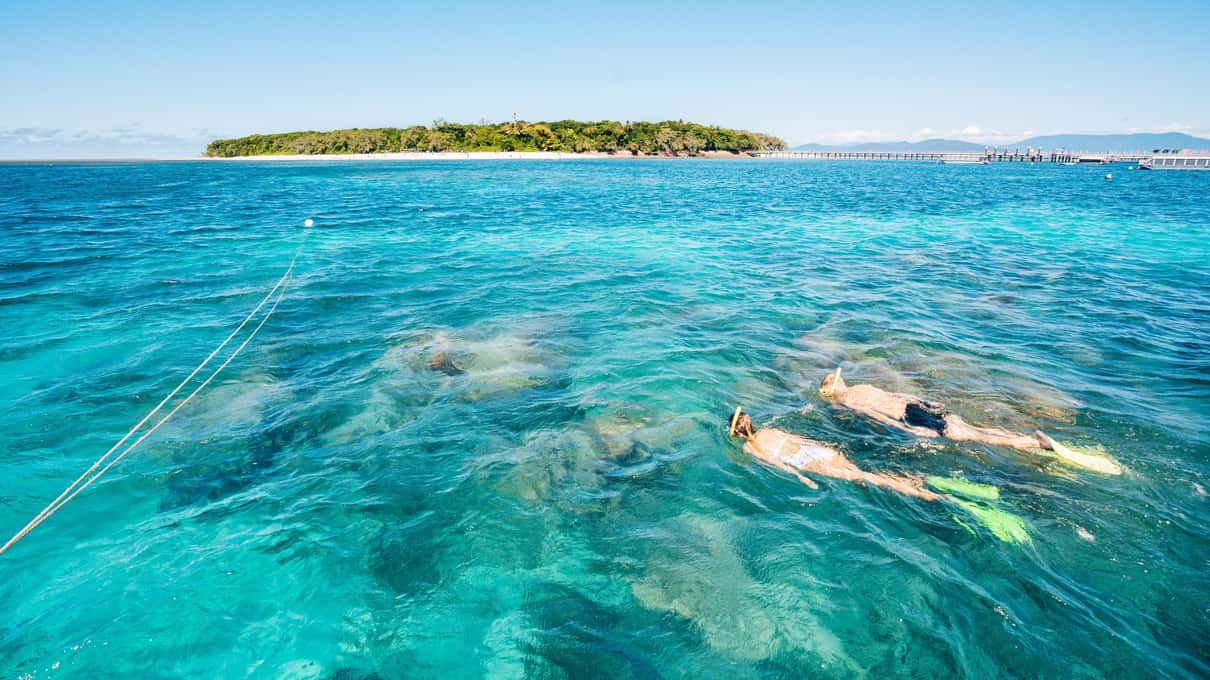
It suits a mixed group where one person snorkels and another wants to stay dry. Afterwards both share the island's beach and its rainforest walk.
A reef day where swimming is optional
Great Adventures takes you to Green Island by fast catamaran. You choose between snorkel gear and a glass bottom boat ride, with a beach to wade from. Compare the two listings for the half and full day options.
4. A semi-submersible
Some reef boats that moor at a pontoon run a semi-submersible, a small craft with a cabin below the waterline and windows along the sides. You sit dry and the coral passes at eye level.
None of the six trips on our tour list names one, so treat this as a general option on other boats. If it is the only way you would go, check a listing for it before you book.
Shallow water and a suit (ways 5 and 6)
5. The shallows off Green Island's beach
Green Island is a small coral cay ringed by shallow water, and you can walk in from the sand. Staying where your feet can touch the bottom takes away the fear of open water, and fish often come in close.
Wear fins or reef shoes even in the shallows, and never stand on coral. Stay inside any area the staff mark for swimming. Our outer reef or Green Island guide covers what the island offers beyond the water.
6. A stinger suit for warmth and confidence
A full lycra suit is there to block jellyfish and sun, yet many beginners find it calming too. It keeps you warmer during a long float, and a covered body somehow feels less exposed.
On the outer reef boats the crew usually hands them out, and Pure Snorkelling lists wetsuits or sun suits by season. The stinger season guide explains why they matter for half the year.
Tell the crew, and fill in the form honestly
Every reef boat has someone watching the water, and they watch more closely when they know who is unsure. Say you are a weak swimmer at the briefing, and ask whether a lookout or guide can stay near you.
Reef boats also ask guests to fill in a medical form. On Passions of Paradise certain conditions rule out the optional dives, and the crew may steer you toward a snorkel or a vest instead. Answer it truthfully, since it decides what is safe for you.
Feeling queasy makes everything harder once you are in the water. If the boat ride worries you as much as the swimming, our seasickness tips come first.
Which trip suits a non-swimmer
- Most choice, least pressure: Green Island from ~$87, where you can stay in the beach shallows or ride a glass bottom boat
- A guide beside you on the outer reef: Pure Snorkelling from ~$144, a half day with up to two hours in the water
- A big, steady boat with time to rest between stops: Passions of Paradise from ~$189
- Marine biologists in the water with small groups: Wavelength from ~$226, from Port Douglas
Bringing children who are still learning too? Our family guide looks at ages and limits on each trip. For what to pack for a first reef day, see the packing list.