Seasickness on the crossing to the Great Barrier Reef
The outer reef lies well off the coast, and the ride there crosses open water. On a breezy morning that ride can shape your whole day. Nine habits help, and some boats ride steadier than others. If the weather cancels a trip, operators usually offer a refund or a new date.
Why the ride out unsettles people
The outer reef sits well off the coast, and listings as well as reviews talk about a long ride out on open sea. Once the boat leaves the shelter of the coast, the swell has room to build, more so when the trade winds blow.
Seasickness comes from your eyes and your inner ear disagreeing about movement. Inside a cabin the walls look still while your body feels the roll, which is why sitting indoors often makes it worse.
Almost anyone can feel it on a lumpy day, including people who never get sick in cars. Planning for it costs little, and the tips below are the ones crews and regular snorkelers lean on.
Nine ways to cope
- Sit low and in the middle. The center of the boat on the lowest deck moves least. The bow rises and falls the most, and an upper deck sways more than the one below it;
- Watch the horizon. Fix your eyes on the line where sea meets sky, which gives your brain a steady reference. Put the phone away on the way out;
- Take tablets before you board. Motion-sickness tablets work best taken ahead of time, not once you already feel ill. Read the packet for timing, since some brands make you drowsy;
- Eat a light breakfast. Plain toast or fruit sits better than a greasy plate or an empty stomach;
- Stay out on deck. Cool air on your face helps. Engine fumes near the back of the boat do the opposite, so pick a spot upwind of them;
- Skip the bar on a rough day. Alcohol on the ride out, or a late night before it, tends to make queasiness worse. Save the drink for the trip home;
- Tell the crew early. Reef crews deal with seasick passengers all the time. They know where their boat rides smoothest and can keep an eye on you;
- Choose a bigger catamaran or a closer reef. A large catamaran usually rides steadier than a small fast boat, and Green Island's short crossing cuts the time at sea;
- Keep a spare day. Book your reef trip early in your stay, so a cancelled day can move to a calmer one.
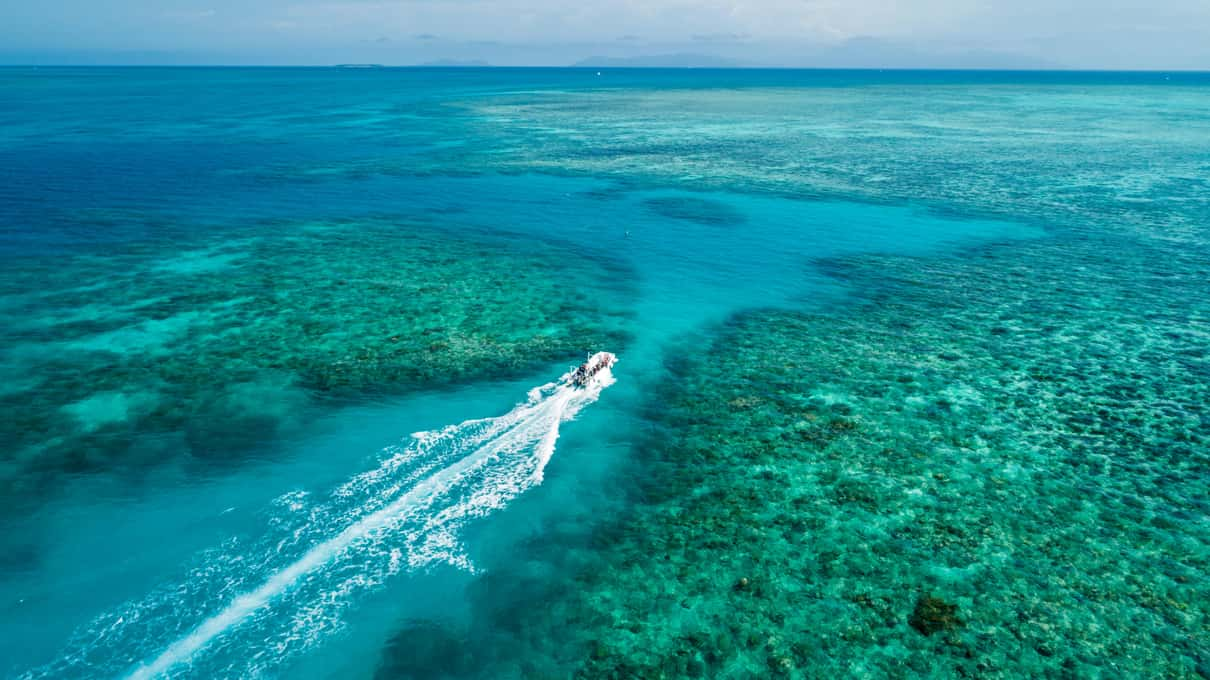
The large catamaran and the fast boats
Passions of Paradise from ~$189 heads out on a large catamaran and holds 4.8 from 3,900+ reviews on GetYourGuide. A big twin hull spreads the motion, though Viator reviewers still mention seasickness on windy days.
Three other tours on our list use fast boats instead. Speed shortens the time on the water, but a light hull can slam over short, steep waves. Viator reviewers of Pure Snorkelling's half day from ~$144 describe a bumpy ride.
Iconic Whitsunday from ~$229 runs a jet speedboat, an open boat with spray and little shelter. Our page on the Bait Reef and Whitehaven day covers that ride from Airlie Beach.
Green Island for a queasy stomach
If you know boats disagree with you, the inner reef is the gentler choice. Great Adventures to Green Island from ~$87 crosses on a fast catamaran, and the ride is short next to any outer reef trip.
You trade open-water coral for a beach and a rainforest walk, with turtles often seen around the island. Our guide to the outer reef or Green Island weighs that trade in more detail.
More reef hours for the same crossing
A rough ride feels better spent when you stay longer at the reef. Ocean Freedom from ~$198 lists about six hours on the reef, split between an outer reef wall and a coral cay called Upolu Cay.
The trip out is still open sea on a fast catamaran, so the tips above apply. A guided drift snorkel and a smorgasbord lunch fill the time at the reef, and the trip holds 4.8 from 1,600+ reviews on GetYourGuide.
Six hours at the reef, two kinds of site
Ocean Freedom leaves from the Reef Fleet Terminal in Cairns, with the Environment Management Charge and port fees included. Dives cost extra if you want one.
The drawbacks are price and length. It is the highest Cairns price of the four Cairns trips here, and a full day on the water. Our price guide shows how it compares with the others.
Wind and cancellations
Reef boats do not always run. When strong wind makes the operator cancel, the usual offer is a refund or a new date. Check the listing's policy before you pay.
On your side, cancelling is usually free up to 24 hours before departure; check your listing to be sure. That leaves a window to watch the forecast and move to a calmer day on your own terms.
A breezy forecast is not always a reason to cancel, and the crew can tell you what to expect. The windier months are covered in our guide to when to go, and when to skip.
Snorkeling after a rough ride
For many people, the queasy feeling eases once the boat stops and they get into the water. Floating face down at a mooring tends to sit better than standing on a rolling deck.
Go slowly anyway. Rest on deck before you swim if you feel weak, and drink some water first. If you still feel unwell, tell the crew before you get in rather than after.
Our packing list for the boat includes the tablets and a water bottle. If children are coming, the guide to a reef day with children covers long days on the water.